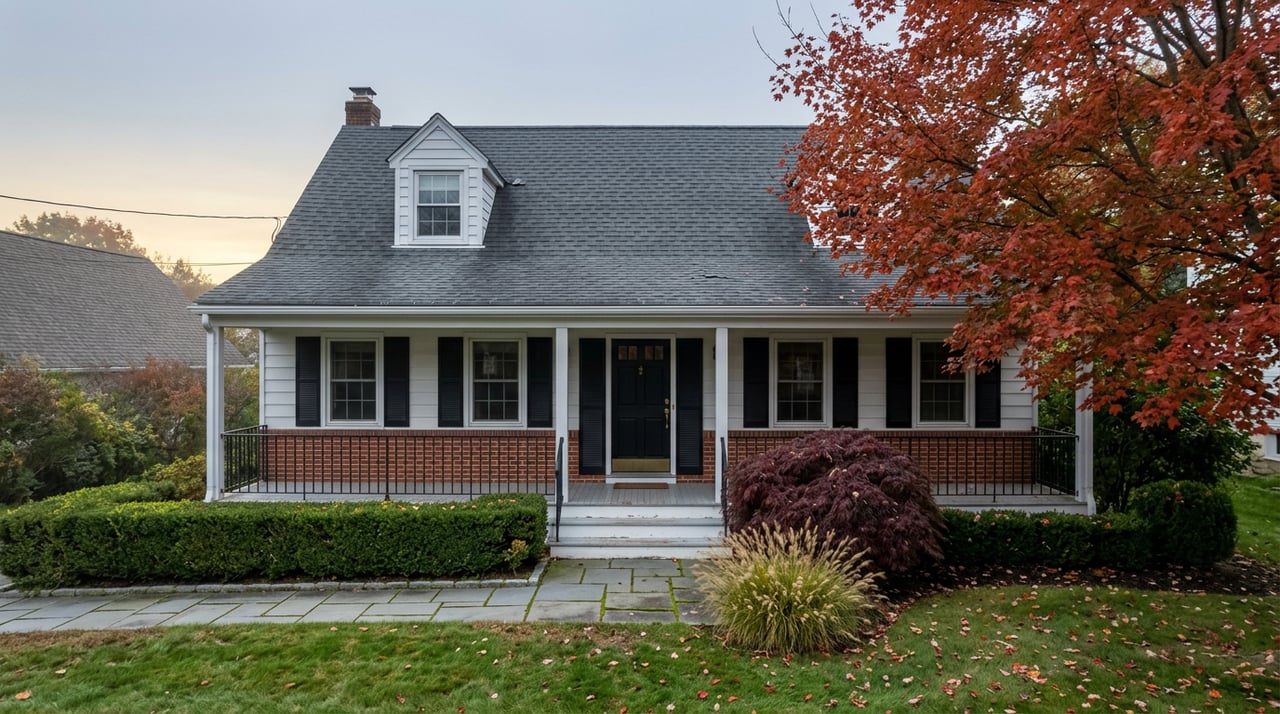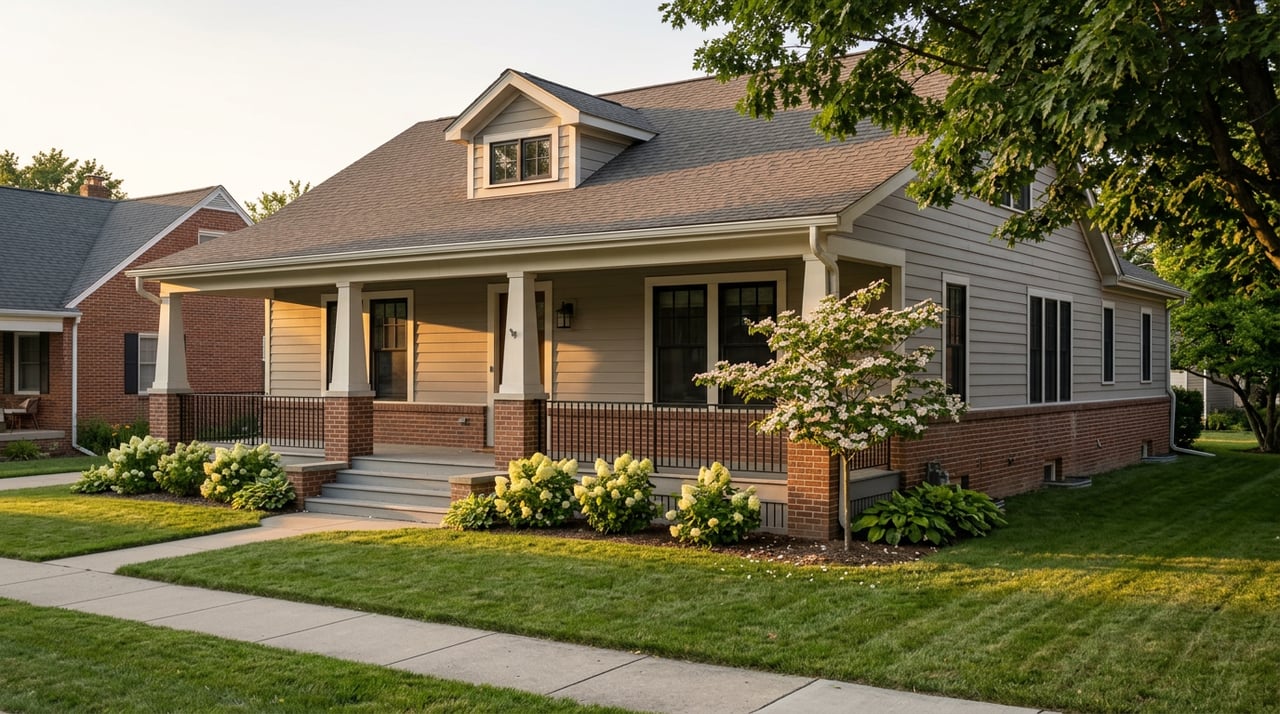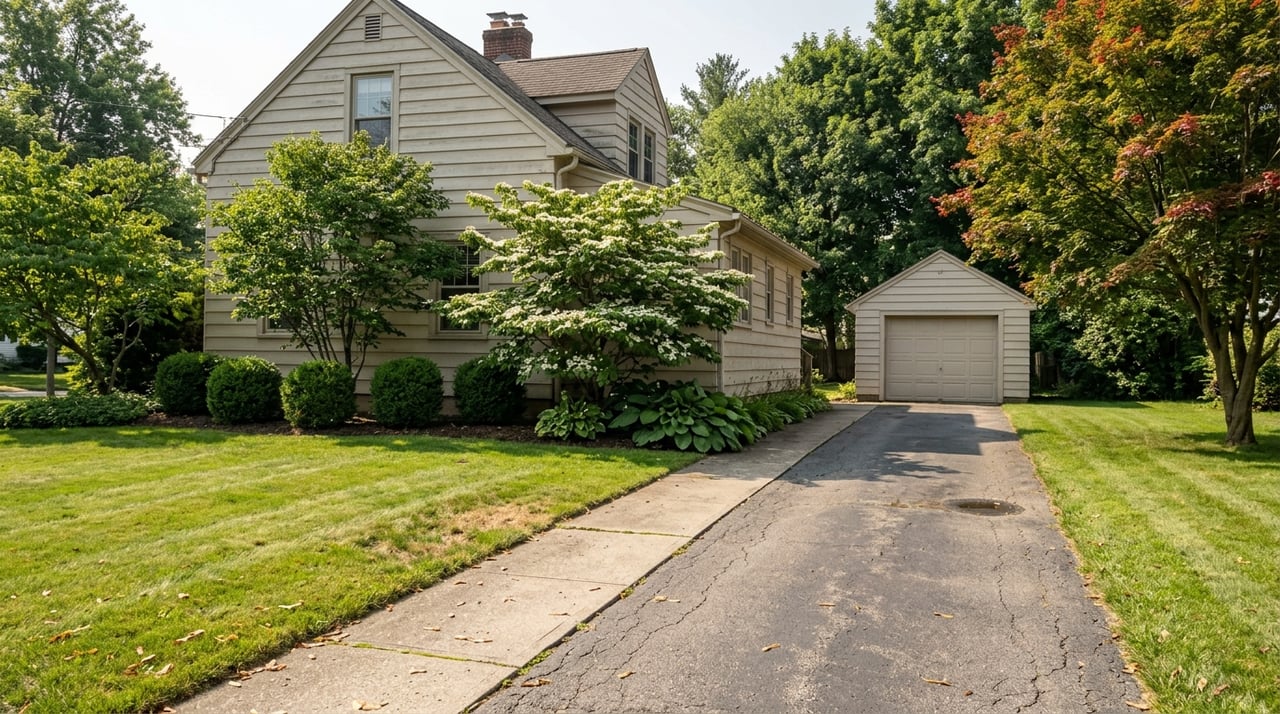
Why would two homes on the same Dickson City street, nearly identical in size and age, suddenly sit on opposite sides of a decision about whether to sell this year? Nothing changed about either house. What changed is the number the county mailed each owner, and that number is now doing something most people haven't connected yet: it's quietly sorting Dickson City's for-sale inventory into a pool that skews toward one kind of seller.
That's the part worth understanding before you list, or before you make an offer on something that's already listed.
What actually happened, in plain terms
Lackawanna County just finished its first countywide property reassessment since 1968. Fifty-eight years is long enough that entire tax systems built on those numbers had drifted far from what homes were actually worth, so a court ordered the county to fix it by the start of 2026. The county hired Tyler Technologies to run a multi-year mass appraisal covering every parcel, and the new values took effect January 1, 2026, alongside a new county millage rate of 5.79 mills, a steep drop from the old rate of 89.98 mills.
That drop is not a tax cut. State law requires reassessments to be revenue neutral, meaning the county can't collect more in total just because home values on paper went up. The millage rate falls because the total assessed value of the county rose, and the two numbers are designed to roughly cancel out for the system as a whole. For any individual homeowner, though, the outcome depends entirely on how their specific property's new value compares to the old one, and that's where things split.
County officials describe the outcome in rough thirds: about a third of property owners ended up paying more, a third paying less, and a third landing close to where they started. One Spring Brook Township homeowner reported that her county tax bill alone doubled. Meanwhile, a local agent quoted in coverage of the rollout noted that clients whose valuations dropped are choosing to stay put, while clients who saw a 30 percent increase decided that was the tipping point to sell. The same agent also pointed out something less obvious: neighbors with similar properties on the same block sometimes ended up with noticeably different numbers, a discrepancy the county is still working through.
The selection effect nobody's pricing in
Here's the mechanism that matters for anyone shopping or listing in Dickson City right now. If reassessment increases are pushing some owners toward selling while decreases are keeping others in place, the homes currently on the market are not a random sample of the neighborhood. They're disproportionately homes whose owners just got hit with a higher carrying cost and decided the math no longer worked for staying.
That has two practical consequences.
If you're buying, the inventory you're touring right now may include a higher share of motivated sellers than a typical year, people who didn't necessarily want to move but whose monthly numbers changed enough to force the question. That's leverage worth asking about directly rather than assuming every listing reflects a purely voluntary decision.
If you're selling, you're not just competing against Dickson City's usual listing pool. You're competing against a pool that's been filtered by the same event that's affecting your own bill, which means buyers touring multiple houses this season may start asking about the new assessed value as a matter of course, whether or not your listing agent brings it up first.
The math trap: a bigger number on the notice doesn't always mean a bigger bill
The instinct when a valuation notice arrives is to treat the new number as scary on its face. That instinct skips a step. The number that actually determines your bill is the assessed value multiplied by the millage rate, and the millage rate just fell by more than 90 percent.
Using the example the county walked residents through when it set the new rate: a property assessed at $245,000 under the new system, multiplied by 5.79 mills and divided by 1,000, comes out to an estimated county tax of $1,418.55. That's one line on the bill. It's not the whole story, because municipal and school district taxes are set separately by those taxing bodies, each adopting its own new, lower millage rate to match the same revenue-neutral requirement. A homeowner has to run the same calculation for all three layers, using their new assessed value, to know whether their total bill actually went up, down, or stayed flat. Comparing the old bill's dollar figure to the new bill's dollar figure is the only reliable check. Comparing the old assessed value to the new assessed value tells you almost nothing on its own, because the two numbers were never meant to sit on the same scale.
This is also why the "roughly a third up, a third down, a third flat" framing matters more than any single average. A countywide average tax change is nearly meaningless for a Dickson City seller trying to price a specific house, because the outcome was never evenly distributed. Your number is your number.
If you're selling in Dickson City this year
A few things follow directly from the mechanics above:
- Get your actual new assessed value and run the full calculation across county, municipal, and school millage, not just the county piece, before you set an asking price or respond to a buyer's question about carrying costs.
- Expect buyers to ask. With this much local news coverage of the reassessment, a buyer touring your home is increasingly likely to ask what the new number does to monthly costs, and a vague answer reads as unpreparedness rather than caution.
- Understand who you're competing against. If nearby comparable listings came onto the market because their owners got hit with increases, your own listing may be priced or perceived against homes whose sellers are more anxious to close than you are. That can work in your favor or against you depending on your own timeline, but it's worth knowing rather than discovering during negotiation.
If you're buying into this market
The flip side applies just as directly. Ask any seller, or their agent, for the property's new assessed value and the resulting estimated tax across all three taxing bodies before you get attached to a listing. A home that looks affordable on price alone can carry a materially different monthly cost than a similar one three streets over, purely because of how the two parcels landed in this reassessment. That difference didn't exist in the same way before 2026, which means older comparisons you might find from past years won't reflect it.
The appeal window is closed right now
One timing detail matters if you're transacting this fall or winter. The formal channel for disputing a 2027 assessed value closed August 1, 2026, and won't reopen until April 1, 2027. Roughly 300 lawsuits have already piled up from owners who disagree with their new numbers, which gives some sense of how contested this process has been. If you or a buyer believes a valuation is wrong, there is no active county appeal to file between now and next spring. Any disagreement over the number has to be handled through the transaction itself, meaning price negotiation, seller concessions, or simply factoring the disputed figure into your own math, rather than through a formal correction that could change the number before closing.
A few direct questions
Does a higher assessed value always mean a higher tax bill? Not necessarily. The 2026 county millage rate fell by more than 90 percent to keep the system revenue neutral, so the only way to know your actual change is to calculate the new bill in dollars and compare it to the old bill in dollars, not compare the assessed values themselves.
If I think my new assessment is wrong, can I still do anything before I sell? The formal appeal window for the 2027 tax year is closed until April 1, 2027. Until then, a dispute over the number has to be addressed within the sale itself rather than through a county correction.
Does this affect every home in Dickson City the same way? No. County officials describe the outcome as landing in roughly even thirds, up, down, and flat, which means two similar homes nearby can have genuinely different outcomes. Your specific number is the only one that matters for your decision.
If you're weighing whether this is the year to list in Dickson City, or you're trying to figure out what a specific property's new assessed value actually means for your monthly numbers, that's exactly the kind of question Luxe Homes Real Estate works through with clients across Lackawanna County every week. Schedule an Investment or Property Consultation and we'll walk through your specific numbers together, not the countywide average.