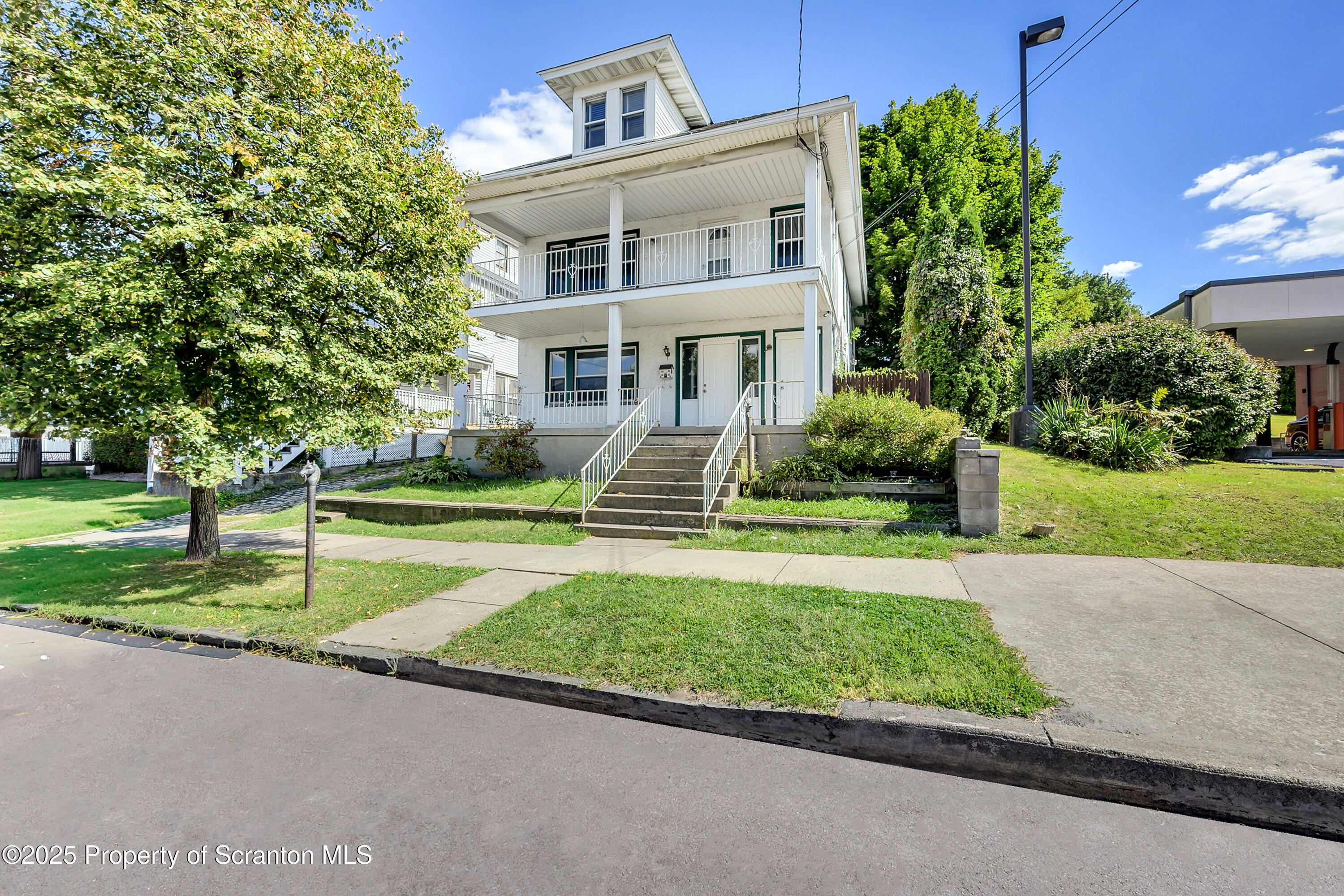
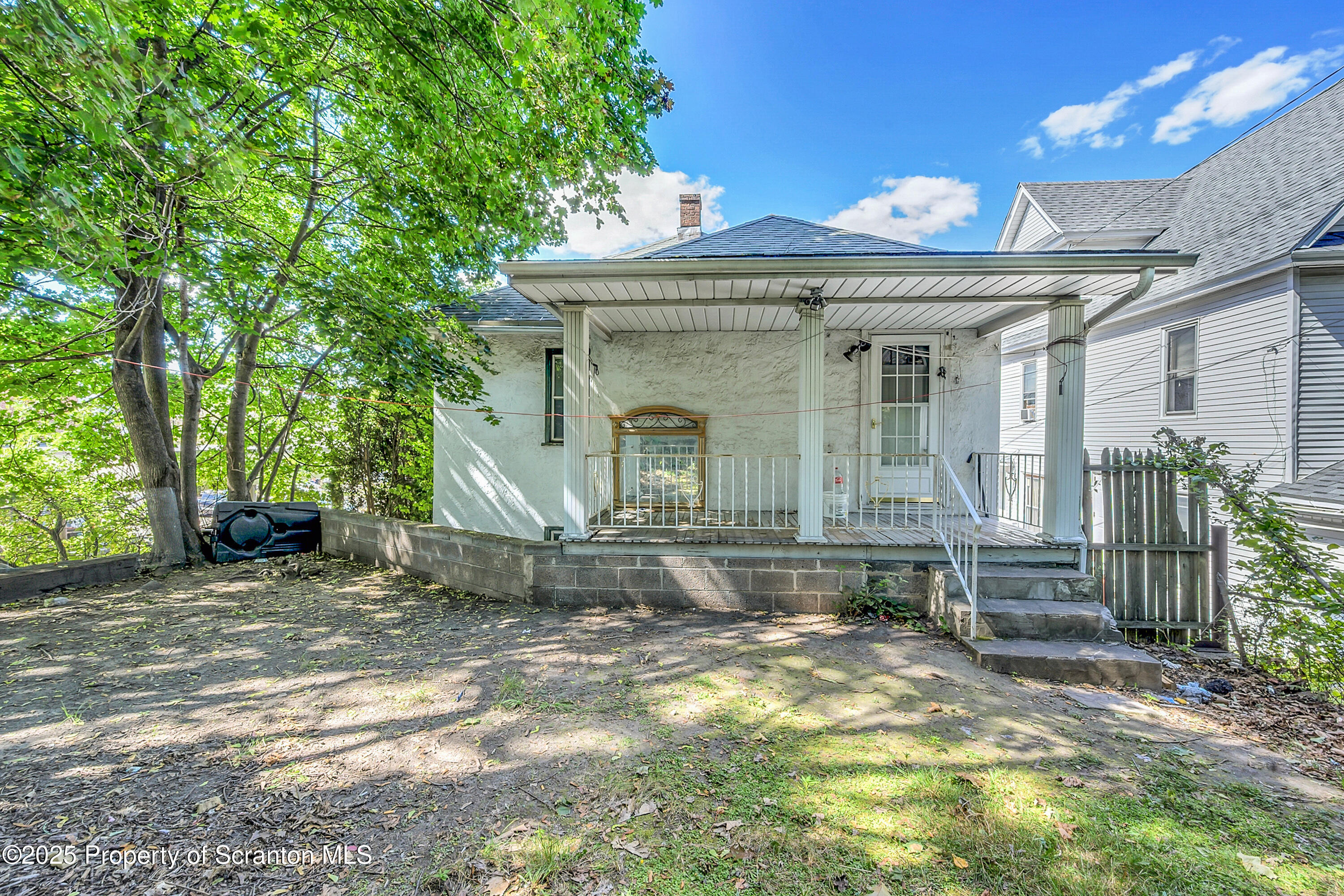
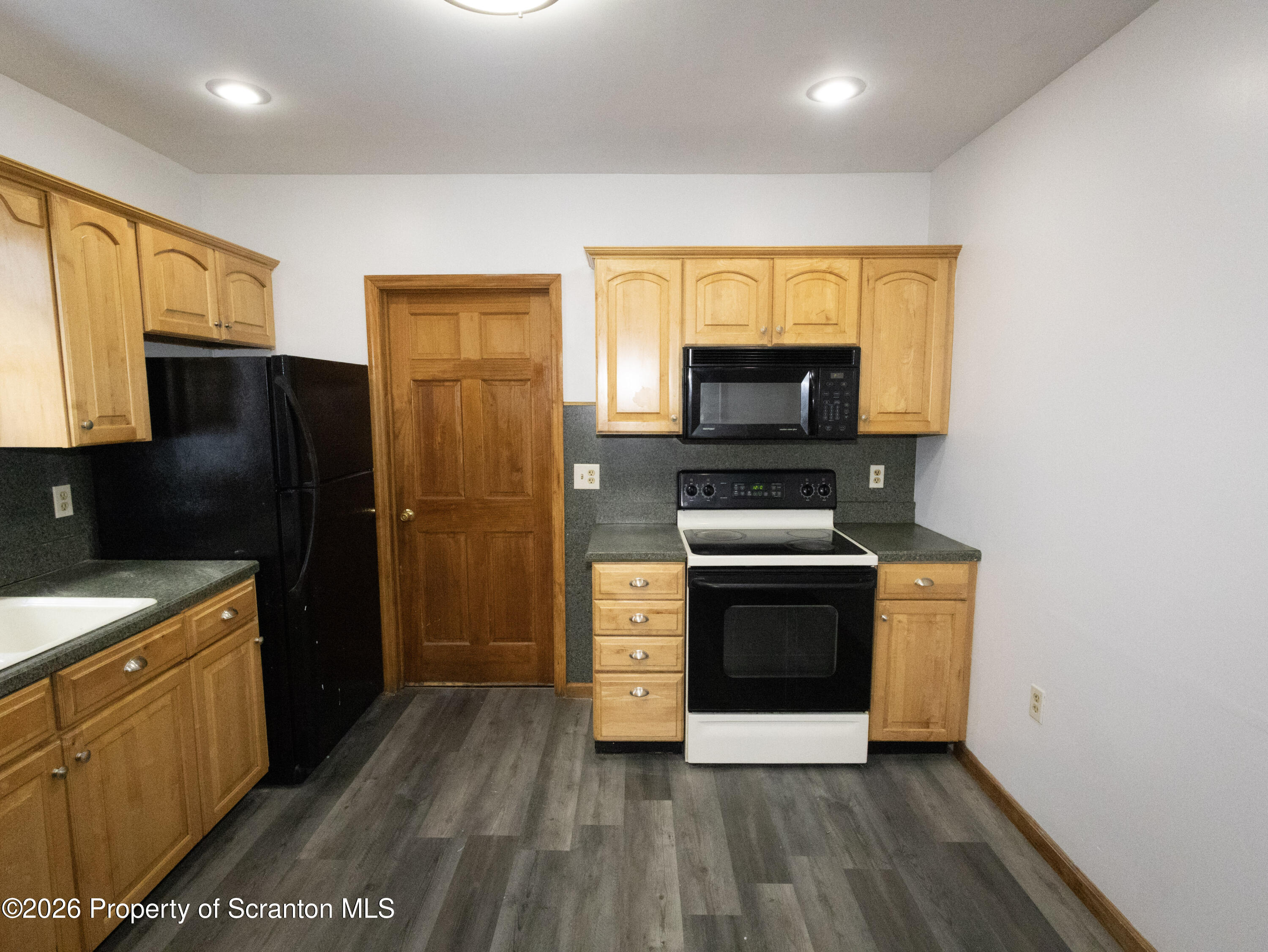
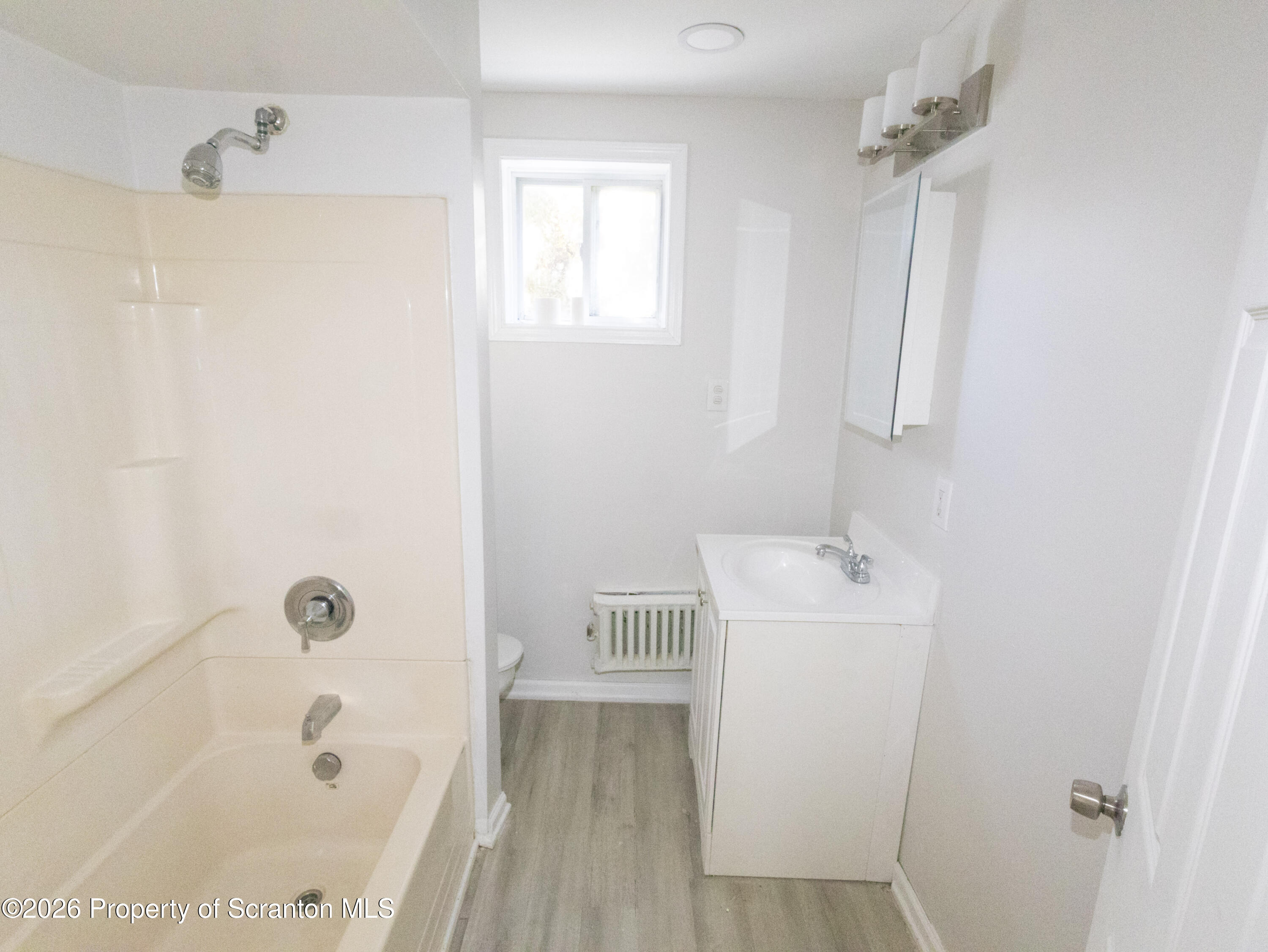
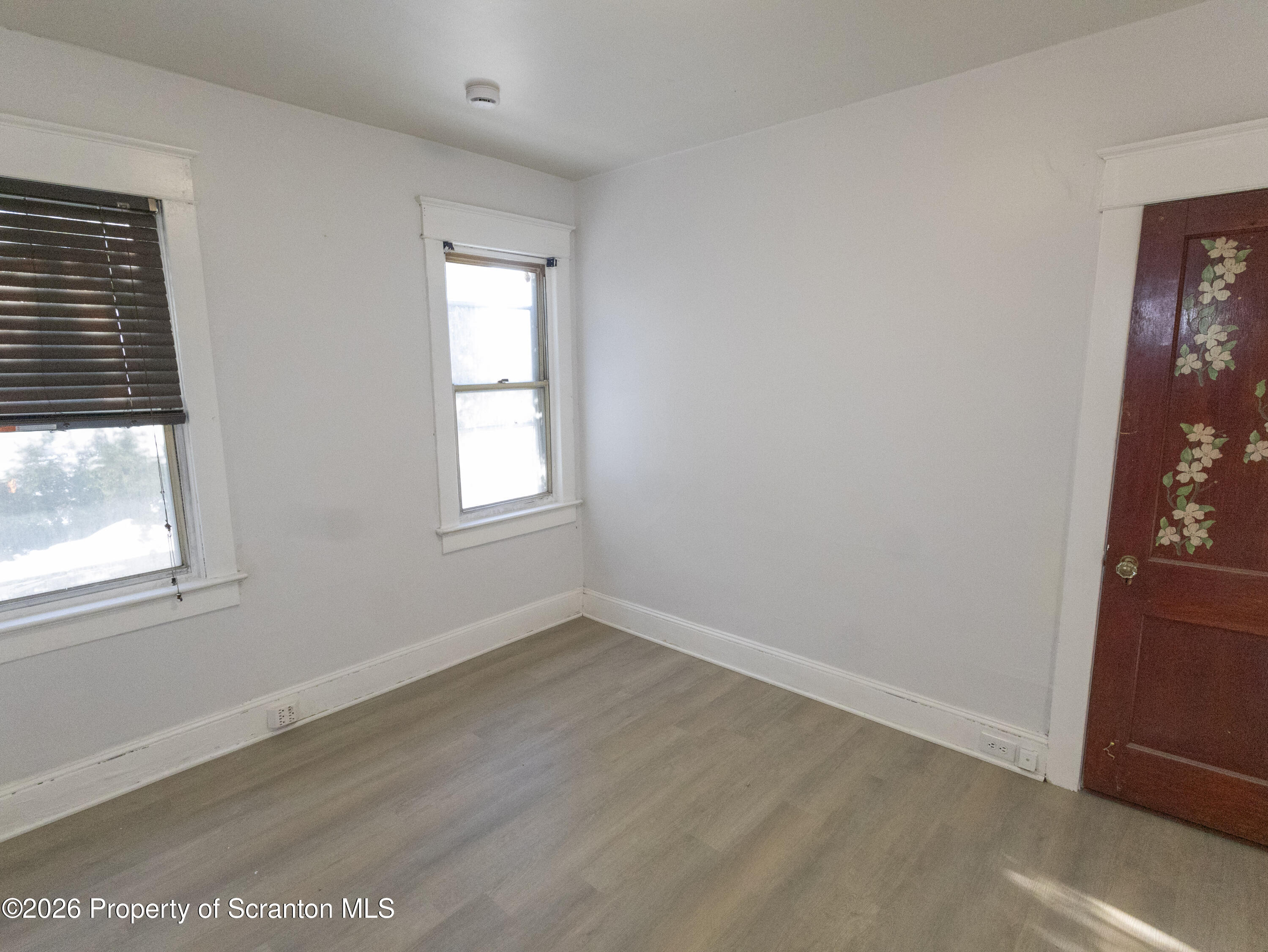
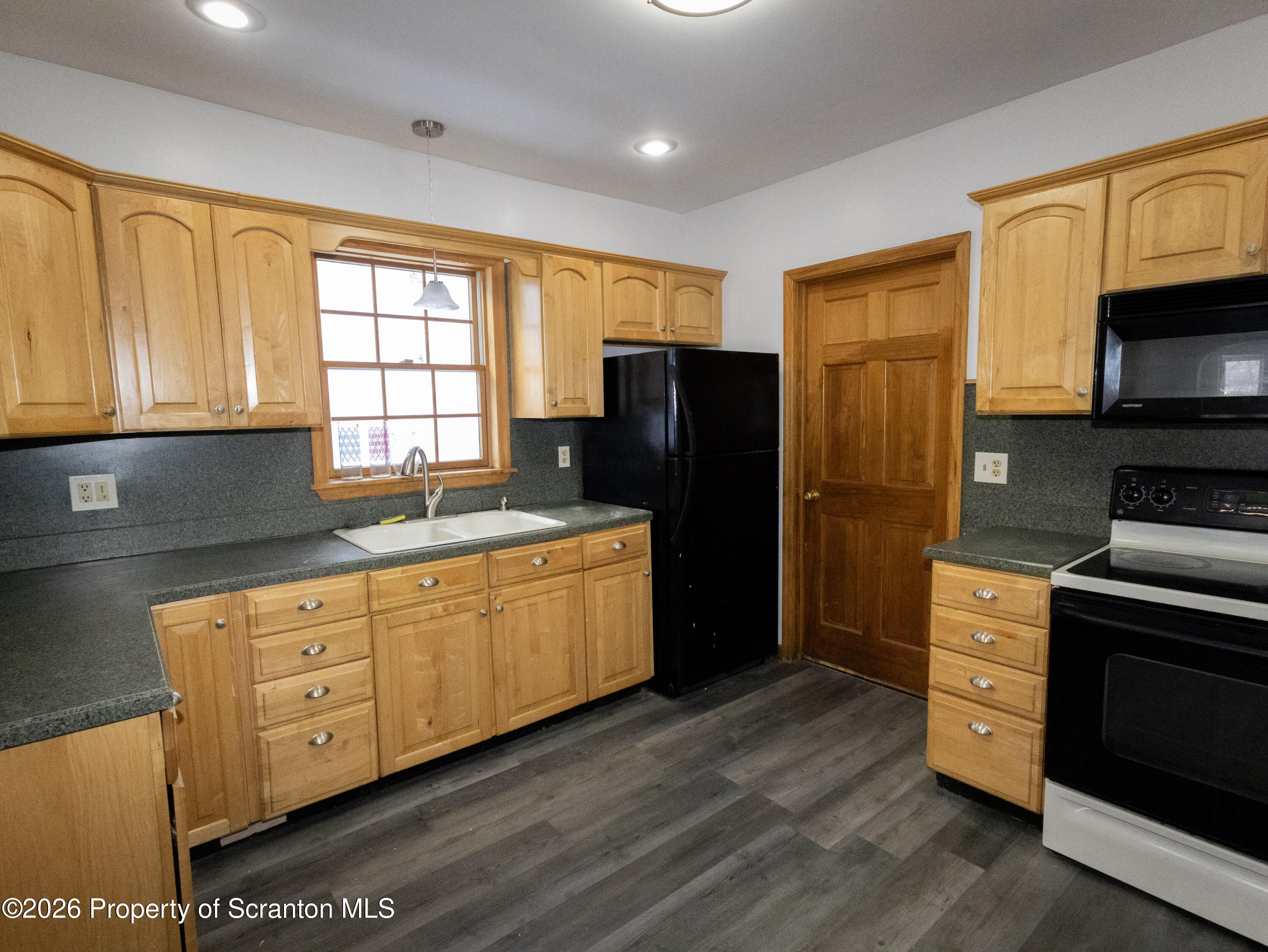
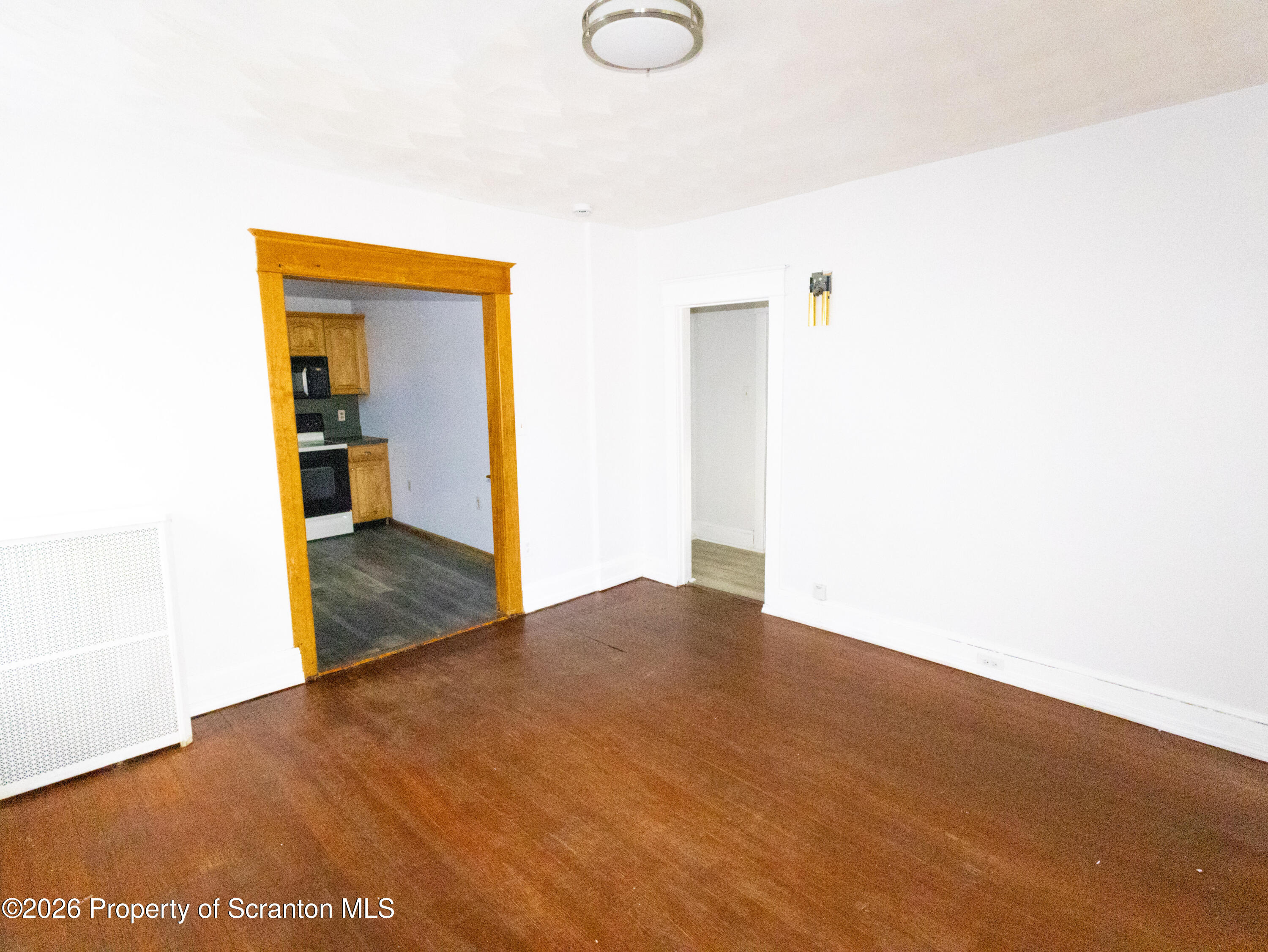
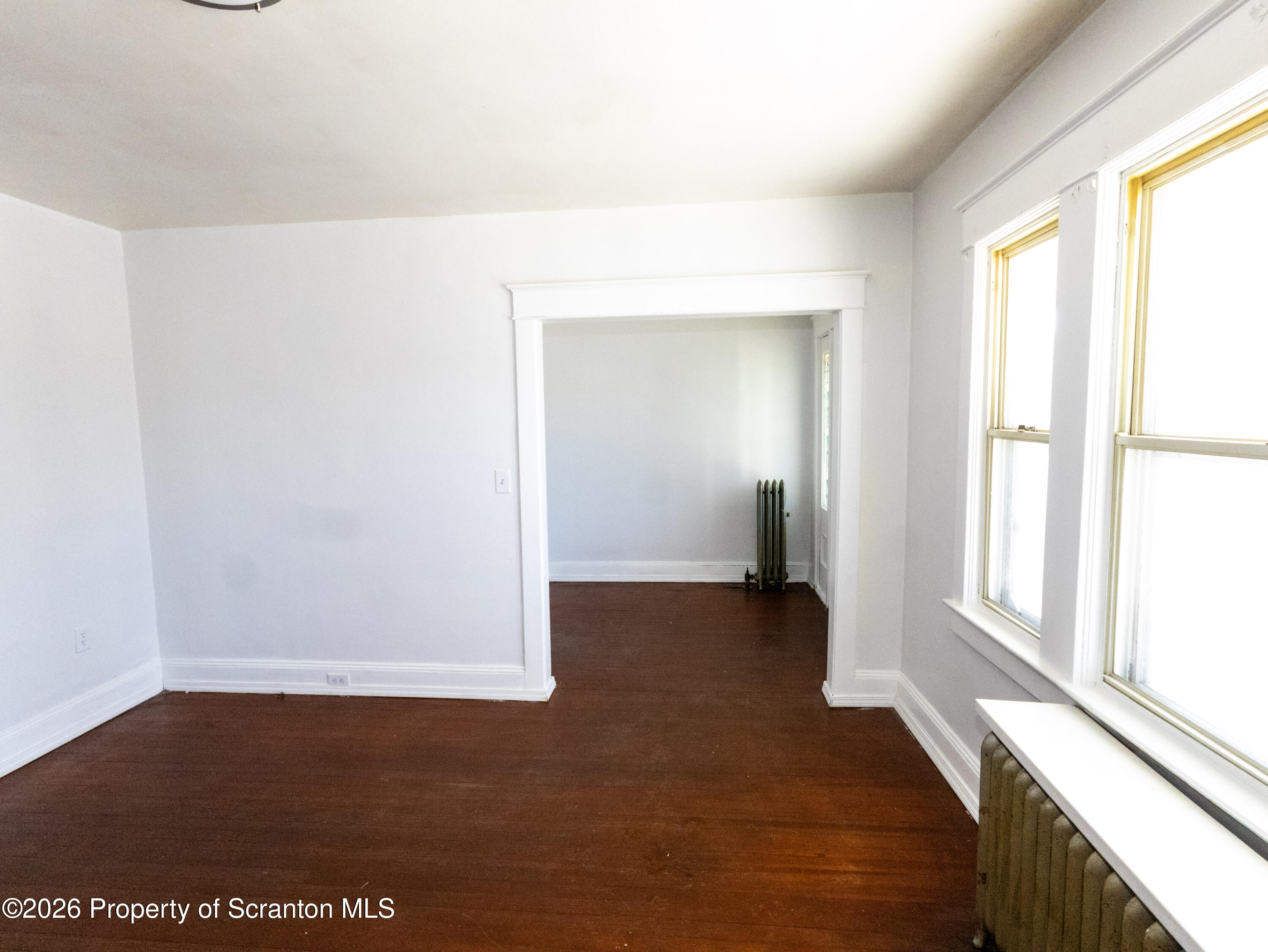
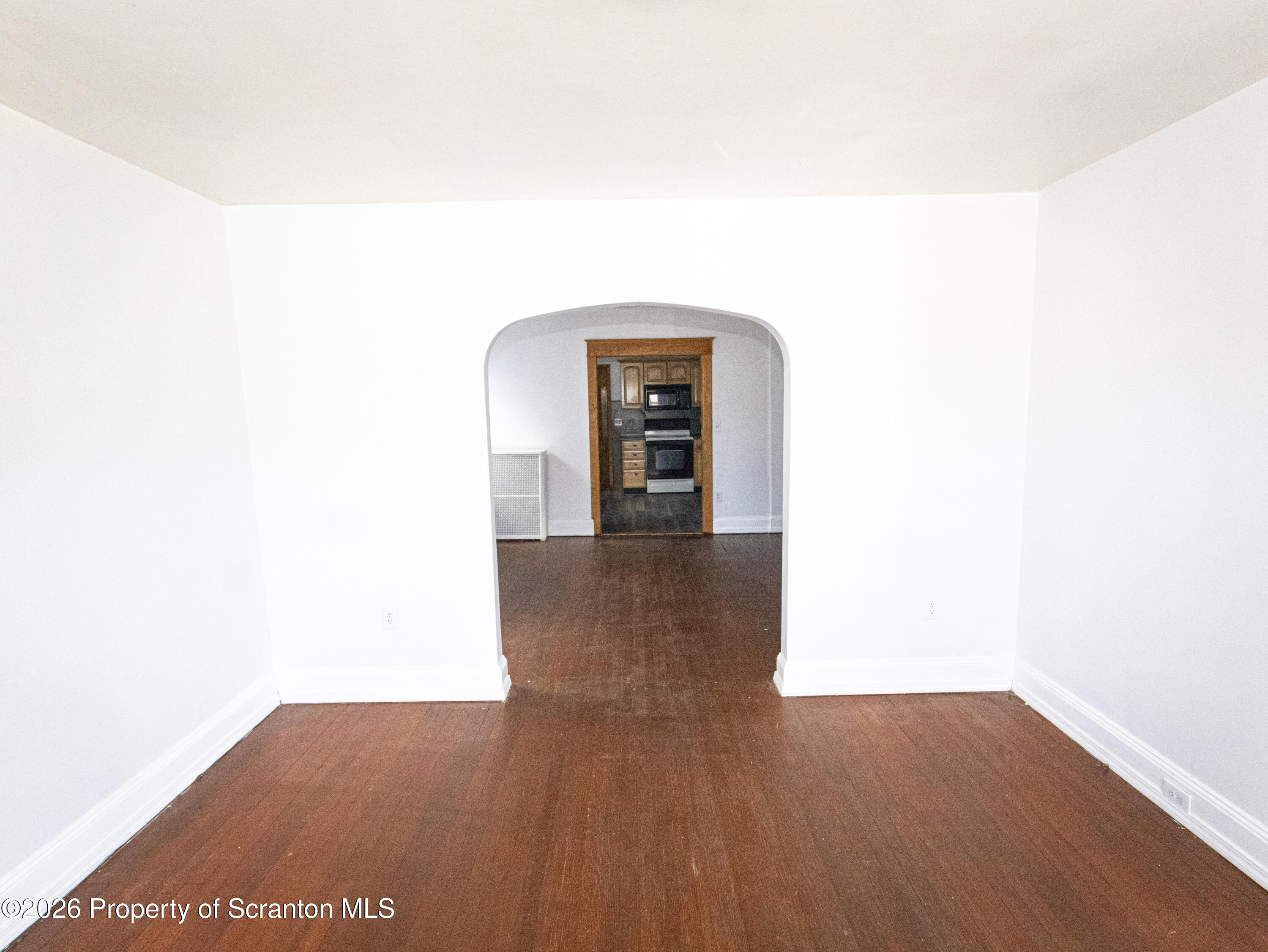
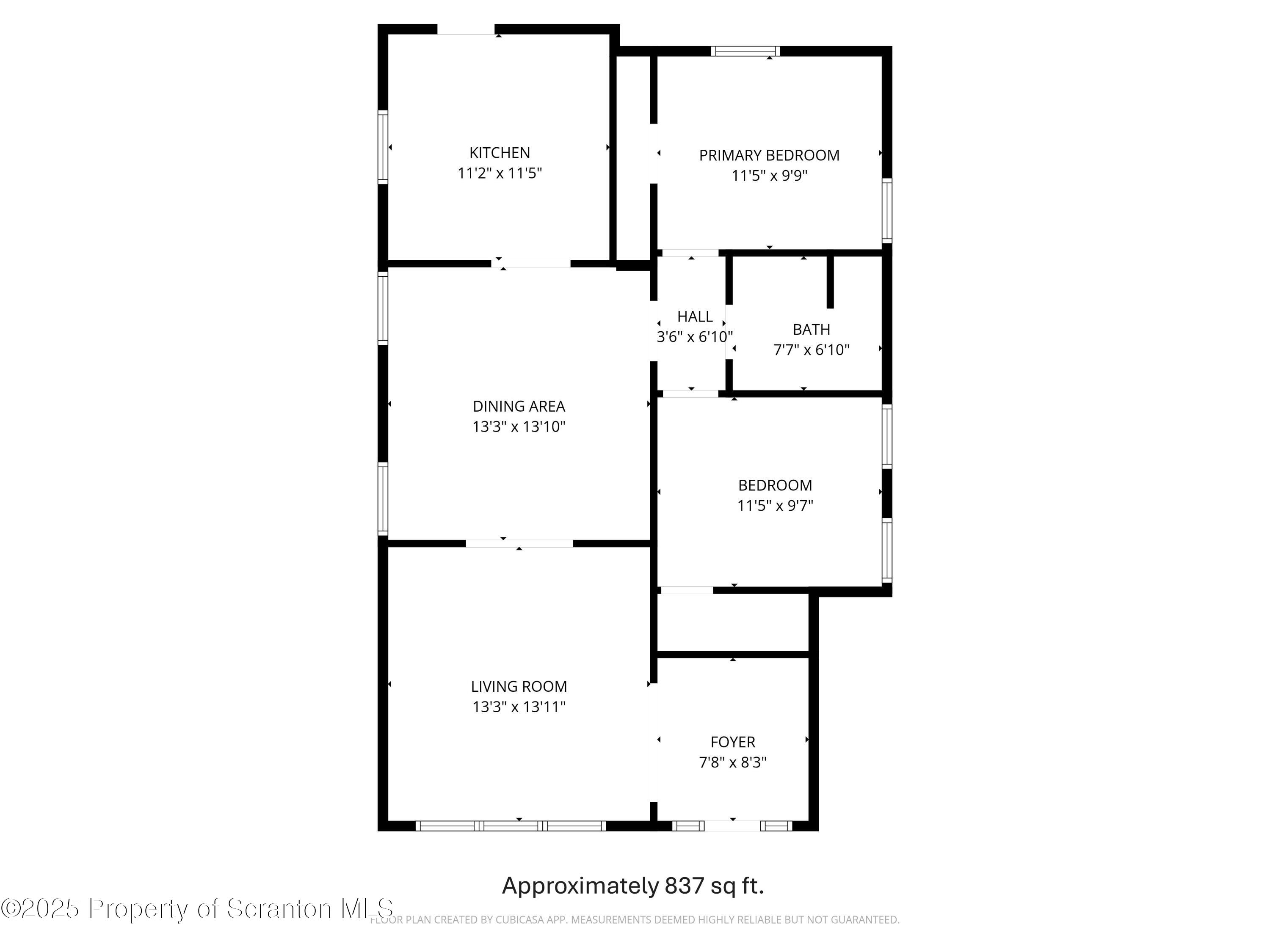
Most searches don't begin with a checklist. They begin with a feeling. A sense that the noise has crept in too far. That daily life has become louder, faster, less settled than it needs to be. And slowly, almost without deciding to, attention turns toward places that feel grounded enough to hold you.For clarity: this is a bottom-floor half-double apartment with two bedrooms and one bath, all on the first level. The landlord pays heat. Electric and water are tenant-paid, along with the annual Scranton garbage fee. Laundry is private to the unit. Everything essential is straightforward, stated plainly, and left to stand on its own.Once the facts settle, the space begins to speak for itself.As you read this, imagine entering from street level and feeling the solidity of the place immediately. The apartment feels anchored, confident in its footprint. You might find yourself noticing the stained glass window--not as decoration, but as a quiet assertion of history, light filtered with intention rather than glare.The layout supports real routines. Rooms open without excess. The washer and dryer sit ready, private, unobtrusive, doing their work without asking for attention. Heat is already accounted for, one less variable to manage, one more thing held steady for you.And when that recognition arrives--because it often does--the next step tends to feel obvious. Reaching out. Asking a question. Scheduling a showing. Not out of urgency, but because some spaces make sense the moment you stop arguing with the