If you like the idea of lowering your housing cost while building long-term value, house hacking in Wilkes-Barre can be a smart path. But this is not a set-it-and-forget-it strategy, especially in a city with older housing, recurring rental inspections, and repair-heavy multifamily stock. If you understand the numbers, local rules, and property condition risks up front, you can make a much more confident move. Let’s dive in.
Why Wilkes-Barre fits house hacking
Wilkes-Barre has a real multifamily base that supports an owner-occupant strategy. According to the city’s 2025 Consolidated Plan, 18% of housing units are in 2-to-4-unit properties, with another 7% in 5-to-19-unit buildings. That matters because house hacking usually starts with the kind of small multifamily homes already built into a city’s housing mix.
Wilkes-Barre is also a renter-heavy market. The city’s 2024 fair housing analysis reported a homeownership rate of 47.9% in 2022, which means renting plays a major role in the local housing landscape. For a buyer planning to live in one unit and rent the others, that can create real opportunity.
Still, you should not confuse vacancy with easy inventory. The city estimated 3,855 vacant units, or about 19.95% of the housing stock, but it also notes that some vacant homes are abandoned, substandard, or better suited for demolition than rehab. In other words, finding a workable property takes local knowledge and careful screening.
What house hacking means
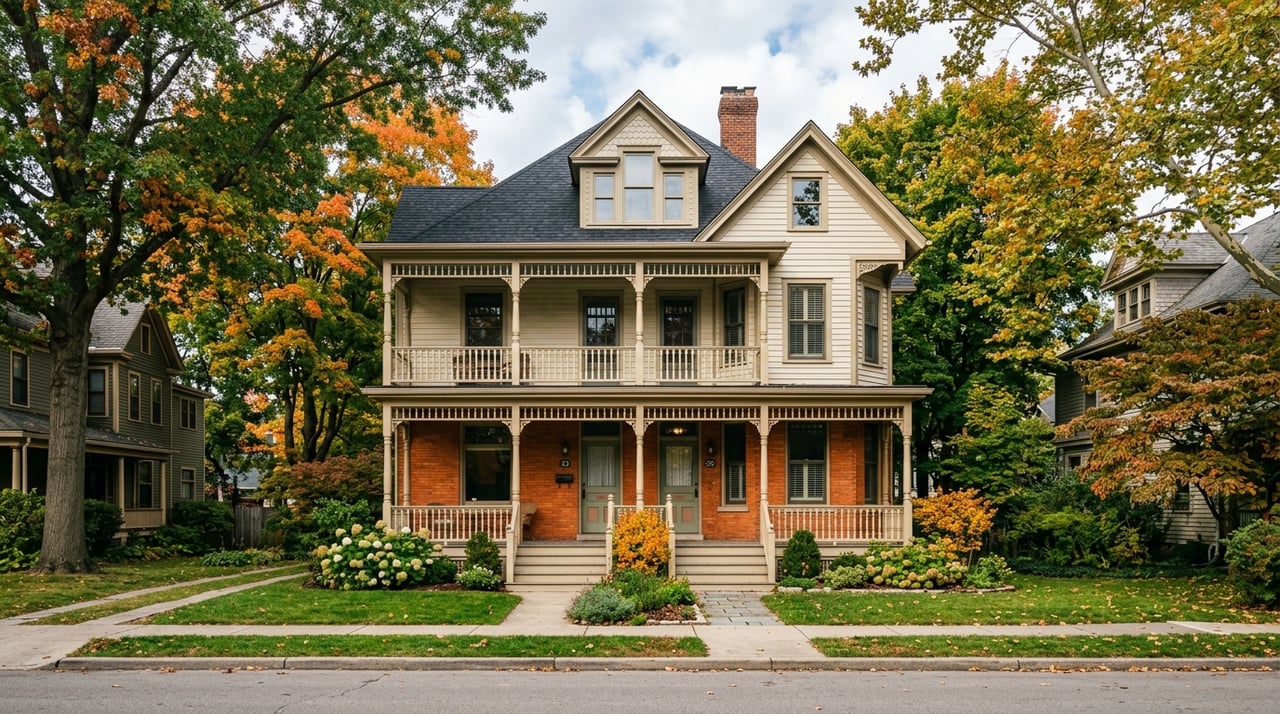
House hacking usually means buying a property, living in one part of it, and renting out the rest to help cover your monthly housing cost. In Wilkes-Barre, that often points buyers toward a duplex, triplex, or four-unit property.
For many buyers, the appeal is simple. Instead of paying the full housing expense from your own income alone, you use rent from other units to offset part of the mortgage and operating costs. Over time, that can help you ease into property ownership while learning how a small rental works.
Best property types to consider
Duplexes and triplexes
For many first-time house hackers, duplexes and triplexes offer a good balance. You can live on site, keep a close eye on maintenance, and spread some of the monthly cost across one or two rented units. That setup can feel more manageable than starting with a larger building.
Four-unit properties
A four-unit property may produce more rental income, but it also brings more moving parts. Financing standards, reserve expectations, turnover risk, and maintenance demands can all feel heavier. If you are considering four units, your budget needs more room for surprises.
Existing multifamily stock
In Wilkes-Barre, existing multifamily stock matters because land for new housing is limited and the city continues to note demand for additional affordable rental housing. The regional planning framework also supports higher residential densities in city-center priority areas. That makes existing small multifamily properties especially relevant for buyers who want to live in one unit and rent the others.
Financing options for a Wilkes-Barre house hack
FHA loans for owner-occupants
For many buyers, FHA financing is the most direct starting point. FHA loans can be used for 1-to-4-unit properties when you occupy the property, and the down payment can be as low as 3.5% of the purchase price. That lower entry point is one reason house hacking often appeals to buyers who want to get started sooner.
If you are looking at a 3-unit or 4-unit property, plan for more reserves. HUD guidance says borrowers need three months of verified principal, interest, taxes, and insurance reserves after closing for 3- and 4-unit properties. That means your cash planning should go beyond the down payment and closing costs.
Conventional financing
Conventional loans can also work for house hacking, but the cash picture may look different. Some options start as low as 3% down, while others require 5% or more. If your down payment is below 20%, private mortgage insurance usually applies.
Rental income and lender math
One of the biggest advantages of a multifamily house hack is that rental income from the non-owner-occupied units may help you qualify. But lenders typically do not underwrite based on wishful thinking. They usually want leases when available, or rent support from comparable rents or the appraisal when leases are not yet in place.
It is also important to understand that not every dollar of rent counts the way you might expect. Fannie Mae says 25% of gross rent is generally absorbed by vacancy losses and ongoing maintenance. That is a useful rule of thumb for your own planning too.
PHFA programs worth reviewing
Pennsylvania buyers should also look at PHFA options. PHFA offers Keystone Home Loan and Keystone Government Loan programs, and its K-FIT assistance can provide 5% toward down payment and closing costs with forgiveness over 10 years. PHFA also offers free homebuyer counseling, which can be especially useful if this is your first multifamily purchase.
The real cost of house hacking here
Wilkes-Barre can work for house hacking, but the city’s housing profile makes it important to budget conservatively. This is an older-stock market, and that changes the monthly math.
The city’s 2024 analysis said 88% of housing was built before 1980, and 56% was built before 1940. Older properties can offer character and solid layouts, but they can also bring deferred maintenance, aging systems, and more frequent repair needs.
The city also reported that only 56% of renter units were considered standard, compared with 84% of owner-occupied units. That does not mean every rental property is a problem. It does mean you should look carefully at unit condition, safety issues, and renovation scope before you buy.
Local compliance costs to budget
Rental license and inspections
If you plan to rent part of your property, recurring city compliance costs matter. Wilkes-Barre says a residential rental license costs $100 per building, and a rental inspection costs $100 per rental unit. These fees are due every two years or when a new tenant is secured.
Those costs should be part of your underwriting from day one. The city also states that failure to comply can lead to a $1,000 fine or 30 days imprisonment, so this is not an area to treat casually.
Buyer notification and occupancy inspections
Before transfer or occupancy, many properties also need Buyer Notification and Occupancy Inspections. The city says properties may be rated Approved, Not-Approved, or Conditional, and the Buyer Notification fee is $90 per unit. If you are comparing two properties, this process can affect both timing and your repair budget.
Permits for renovation work
If your house hack needs updating, remember that permits still apply. Wilkes-Barre requires permits for electrical, building, plumbing, HVAC, driveways, and curb cuts. Homeowners can apply when the work is for their primary residence, which is useful if you plan to improve the unit you live in.
Flood, lead, and rehab risks
Flood insurance can change the numbers
Flood insurance should be part of your early due diligence, not an afterthought. The county analysis says updated flood maps shifted as many as 1,000 properties into higher-risk areas, increasing premiums for affected owners. A property that looks affordable at first glance can feel very different once insurance costs are added.
Lead-based paint is a real concern
Because so much of Wilkes-Barre’s housing was built before 1980, lead-based paint risk is part of the conversation. The city’s 2025 plan specifically notes that pre-1980 housing likely contains lead-based paint. If you are buying an older multifamily property, lead-safe renovation planning should be built into your budget and timeline.
Local rehab help may exist
The city’s 2025 plan also describes an Emergency Rehabilitation Program and a low-interest housing loan or grant program for owner-occupied 1-to-2-unit structures. Availability and eligibility can vary, but these programs show that rehab needs are a recognized part of the local housing picture.
How to underwrite rent realistically
Local rent data needs context. Wilkes-Barre’s 2016 to 2020 ACS median contract rent was $584 per month, while HUD’s FY2026 Fair Market Rents for the Scranton-Wilkes-Barre MSA were $863 for a studio, $1,028 for a one-bedroom, $1,252 for a two-bedroom, $1,631 for a three-bedroom, and $1,766 for a four-bedroom. These numbers are not interchangeable because they measure different things.
HUD says Fair Market Rents are gross-rent estimates used for housing programs and include tenant-paid utilities except telephone, cable or satellite television, and internet. So when you analyze a property, avoid grabbing one rent number and forcing it onto every unit. Unit size, condition, utility setup, and actual local comparables all matter.
A practical approach is to stay conservative. Build in the 25% vacancy and maintenance haircut used in lender guidance, then add your recurring city fees, insurance, repairs, and reserves. If the deal still makes sense after that, you are looking at a healthier house-hack candidate.
Why management support can matter
Even if you plan to live on site, a Wilkes-Barre house hack can become more hands-on than many buyers expect. Older housing, rental inspections, tenant turnover, occupancy rules, and maintenance coordination all take time. That is one reason some owner-occupants prefer a partner who can help beyond the closing table.
Luxe Homes Real Estate LLC works across NEPA with buyer representation, multifamily acquisition support, leasing, and ongoing property management. For a buyer who wants to move from purchase to stable ownership without juggling multiple providers, that kind of local support can simplify the process.
A smart way to think about house hacking here
In Wilkes-Barre, house hacking is real, but it works best when you treat it like a long-term ownership strategy rather than a quick cash-flow shortcut. The city’s multifamily base, renter-heavy profile, and limited room for new housing all support the idea. At the same time, older housing stock, recurring inspections, flood risk in some areas, and repair needs mean your margin for error matters.
If you go in with a clear budget, realistic rent assumptions, and a solid plan for compliance and maintenance, a duplex, triplex, or four-unit property can do more than reduce your monthly housing cost. It can give you a practical first step into real estate ownership and investment.
If you want help evaluating multifamily opportunities in Wilkes-Barre, from purchase strategy to leasing and property management, schedule an investment or property consultation with Luxe Homes Real Estate LLC.
FAQs
What is house hacking in a Wilkes-Barre multifamily property?
- House hacking in Wilkes-Barre usually means buying a duplex, triplex, or four-unit property, living in one unit, and renting the other unit or units to help offset your housing costs.
Can you use FHA financing for a Wilkes-Barre multifamily house hack?
- Yes. FHA loans can be used for 1-to-4-unit properties when you live in the property, and the down payment can be as low as 3.5%, though 3-unit and 4-unit purchases may also require three months of verified reserves after closing.
What local costs should you budget for a Wilkes-Barre house hack?
- You should budget for rental license fees, rental inspection fees, Buyer Notification and Occupancy Inspection fees, permits for renovation work, insurance, repairs, and ongoing reserves for vacancy and maintenance.
Are older Wilkes-Barre multifamily homes riskier to house hack?
- Older properties can still work well, but Wilkes-Barre has a very old housing stock, which means you should plan carefully for repairs, lead-based paint concerns, and maintenance before you buy.
Does flood risk matter when buying a Wilkes-Barre multifamily property?
- Yes. The county analysis says updated flood maps moved as many as 1,000 properties into higher-risk areas, which can raise insurance premiums and affect the overall affordability of a property.
How should you estimate rent for a Wilkes-Barre house hack?
- Use actual leases when available, review comparable rents carefully, and underwrite conservatively by allowing for vacancy and maintenance instead of assuming every month will be fully rented with no repairs.