If you want steady cash flow without big-city headaches, Olyphant may be the right place to start. This small Lackawanna County borough offers affordable prices, reliable local employers, and rents that can support conservative buy-and-hold strategies. Whether you are eyeing your first door or planning to scale to ten units, you can build a durable rental portfolio here with disciplined underwriting and good operations. In this guide, you’ll learn where to look, how to run the numbers, and what to watch before you buy. Let’s dive in.
Why Olyphant works for small portfolios
Olyphant sits about six miles northeast of downtown Scranton, which keeps commute times short and demand tied to regional employers. Borough sources count the population in the 5,000 to 5,400 range, which supports a close-knit, steady rental base rather than heavy churn. You can confirm location context and local contacts on the Olyphant Borough site.
Household incomes in Olyphant trend in the low-to-mid $60,000s, with median property values commonly referenced in the $140,000 to $200,000 range. These figures, drawn from American Community Survey summaries, show the area’s affordability compared with many metro markets. Explore the borough profile on DataUSA and ACS visuals on Census Reporter for more context.
Employment for residents leans toward health care, manufacturing, and educational services across the Scranton metro. This supports steady, commuter-driven demand rather than seasonal spikes. For a recent read on area occupations and wages, review the Scranton release from the U.S. Bureau of Labor Statistics.
Housing mix and what that means for investors
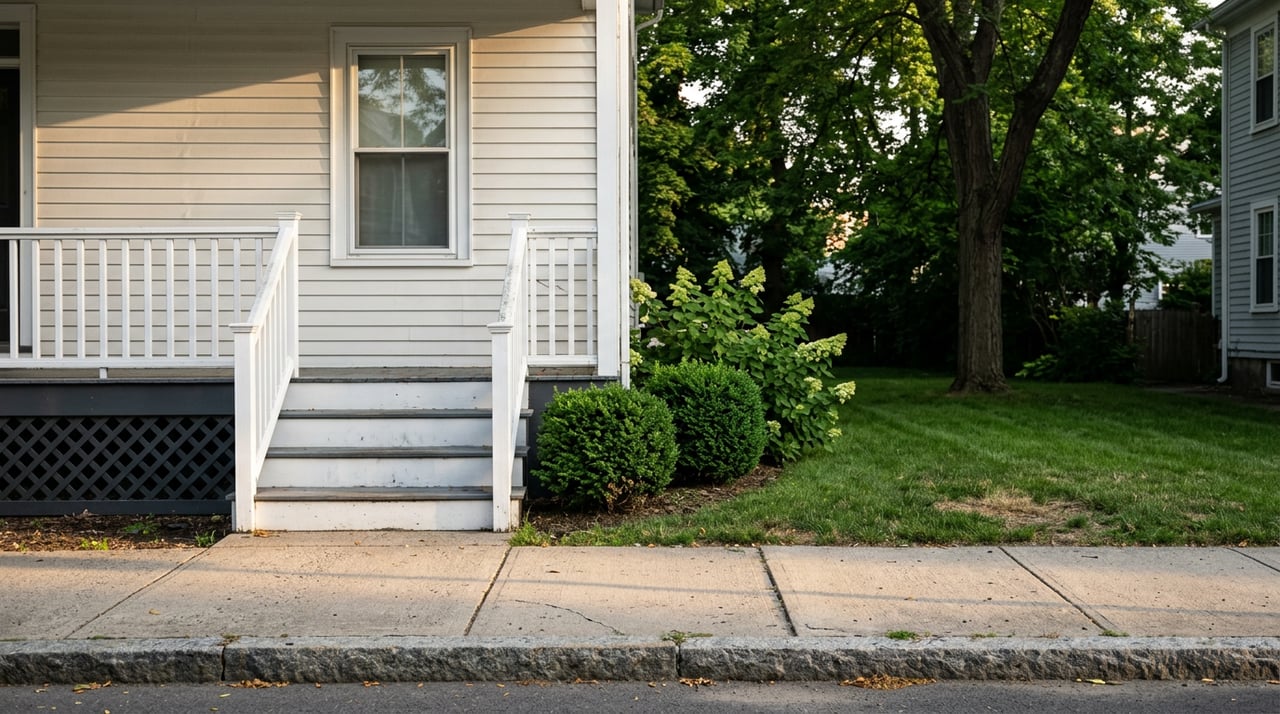
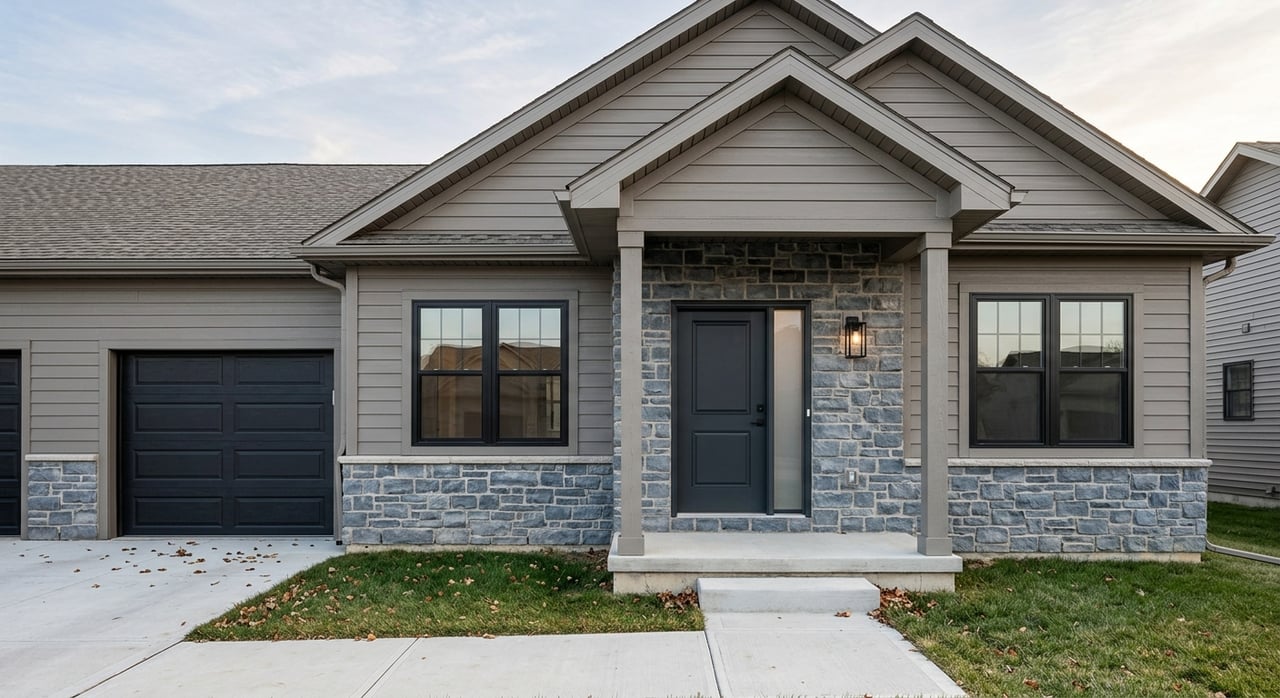
Most homes in and around ZIP code 18447 are single-family, with multifamily making up a smaller share of available stock. Owner-occupancy is above the national average, which tends to keep the rental market more stable and less volatile. Broader vacancy indicators show roughly 7 percent at the ZIP level in recent ACS periods, but you should still underwrite to your block and bedroom mix rather than relying on a headline number. See ZIP-level housing summaries on ZIP-Codes.com.
What this means for you: single-family rentals and smaller multifamily buildings are both available, but investor inventory is limited compared with bigger cities. Patience and strict buy-box criteria can pay off.
Rents, prices, and realistic expectations
As a quick reference point, consumer listing snapshots place the average rent in Olyphant around $1,000 per month. HUD’s FY 2026 fair market rents for ZIP 18447 run higher by bedroom count, with a 2-bedroom near $1,280 and a 3-bedroom near $1,670. These ranges reflect the importance of validating by unit size, condition, and street.
Purchase prices vary by property type and condition. In recent cycles, you can find single-family opportunities under $200,000 and small multifamily from the mid-$100,000s into the $300,000s and $400,000s. Always confirm actual income and expenses rather than relying on list copy.
Pro tip: Build a conservative rent range for your analysis. Use three tiers for each subject property based on local comps and recent leases: conservative, mid, and stretch. Underwrite to the conservative number and let the upside be a bonus.
How to run the numbers
Understanding a few core metrics will help you screen deals fast:
- Gross Rent Multiplier (GRM) = Purchase Price / Annual Gross Rent. Lower is better when comparing similar assets.
- Capitalization Rate (Cap Rate) = Net Operating Income (NOI) / Purchase Price. NOI is income after vacancy and operating expenses, before debt.
- Cash-on-Cash Return = Annual Cash Flow after debt / Total Cash Invested.
- Debt Service Coverage Ratio (DSCR) = NOI / Annual Debt Service. Many lenders want at least 1.20 to 1.25.
Mortgage rates move, and they matter. As of early 2026, 30-year fixed rates hovered in the mid-6 percent range, which directly impacts cash flow and DSCR. Check current trends before you finalize a pro forma, such as the rate coverage reported by Mortgage Professional America.
Conservative operating reserves
- Vacancy reserve: 5 to 8 percent for small multifamily; 6 to 10 percent for single-family homes.
- Management fee if outsourced: 8 to 12 percent of collected rent, plus leasing and renewal fees. See typical ranges in this property management overview.
- Maintenance and repairs: 5 to 10 percent of gross rent per year, or about 1 percent of property value annually for screening. Learn more about reserve planning in this maintenance cost guide.
- Taxes and insurance: Pull parcel-level taxes from county sources and get an insurance quote. ACS data shows median property taxes locally in the low thousands per year, but verify for each parcel.
Sample deals: what pencils in Olyphant
The following three scenarios use a 30-year fixed mortgage at 6.25 percent for illustration. Replace with current rates when you run your numbers.
Deal A: Entry single-family
- Assumptions: $175,000 purchase; 20 percent down; loan $140,000. Rent $1,200 per month for a 3-bed. Vacancy 8 percent. Taxes $1,600 per year. Insurance $1,000 per year. Maintenance 7 percent of gross. Management 10 percent of collected rent.
- Results: Gross rent $14,400; effective gross after vacancy about $13,248; operating expenses about $4,933; NOI about $8,315. Annual principal and interest about $10,342. Annual cash flow about negative $2,027. Cap rate near 4.8 percent. This often means you need tighter pricing, a larger down payment, or both for single-family cash flow to work.
Deal B: Duplex step-up
- Assumptions: $225,000 purchase; 20 percent down; two units at $1,000 each. Vacancy 5 percent. Taxes $1,800. Insurance $1,200. Maintenance 7 percent of gross. Management 10 percent.
- Results: Gross rent $24,000; effective gross about $22,800; operating expenses about $6,960; NOI about $15,840. Annual principal and interest about $13,297. Annual cash flow about $2,543. Cap rate near 7.0 percent and cash-on-cash near 5.6 percent.
Deal C: Small multi, five units
- Assumptions: Listed price around $399,000 for a five-unit. Underwrite average rent at $1,000 per unit. Vacancy 5 percent. Taxes about $1,553. Insurance estimate $2,500. Maintenance 7 percent of gross. Management 10 percent. Down payment 25 percent.
- Results: Effective gross about $57,000; operating expenses about $13,953; NOI about $43,047. Annual debt service about $22,106. Annual cash flow about $20,941. Cap rate near 10.8 percent with strong paper returns. The catch is accuracy: verify the rent roll, leases, utility splits, and capital needs before relying on these numbers.
Due diligence and local checks
Do not skip the groundwork. Use this checklist before you commit:
- Rent roll and leases: Confirm current rents, deposits, lease terms, and any concessions.
- Tenant payment history: Review ledgers and late or partial payment patterns.
- Utilities: Identify who pays for heat, hot water, electric, water, sewer, and trash. Get actual bills or a signed utility cost statement.
- Repairs and CapEx: Ask for a list of recent work and known issues. Budget for roof, HVAC, plumbing, windows, and common-area upgrades.
- Taxes and assessments: Pull parcel-level data from Lackawanna County and verify millage. The county’s planning resources are a good starting point, including this County Lines overview.
- Permits and inspections: Check for any rental registration, occupancy, or inspection requirements with the Olyphant Borough office.
- Legal compliance: Pennsylvania’s Landlord and Tenant rules cover security deposits, escrow, and timelines. Review a plain-language summary such as this Nolo guide on PA security deposits and consult counsel for lease language.
Operations and scaling from 1 to 10 units
Getting from one door to ten is about systems. Here is what to set up early:
- Standardize your lease and screening. Keep criteria consistent and compliant, and store documents digitally.
- Build a vendor panel. Line up a plumber, electrician, HVAC tech, handyman, and cleaner before a call comes in.
- Decide on management. Full-service management often runs 8 to 12 percent of collected rent plus leasing fees, which can simplify growth. See typical ranges in this management fee overview.
- Track performance. Use simple software for rent rolls, work orders, and P&L. Review your DSCR and cash-on-cash quarterly and adjust rents and expenses based on actuals.
Risks to underwrite in NEPA
- Employer concentration: Local demand ties to health care, manufacturing, and education. A downturn in these sectors can pressure rents.
- Older housing stock: Many buildings predate 1950. Expect higher maintenance and possible code-triggered upgrades.
- Small-market liquidity: Exiting a small multifamily may take longer than in a large metro. Use conservative exit cap rates and days-on-market assumptions.
A simple plan to start in Olyphant
Define your buy box. Pick property type, bed/bath mix, and maximum price that meets your cash-on-cash target.
Build your rent range. Use recent local leases and bedroom-specific comps. For benchmarking, note that Olyphant’s average rent hovers near $1,000, with HUD FMRs higher for 2- and 3-bedrooms.
Run three financing cases. Model your deal at today’s rate, 0.5 percent higher, and 0.5 percent lower. Rates have sat in the mid-6 percent range recently, as noted by Mortgage Professional America.
Confirm expenses. Pull parcel taxes, get an insurance quote, and set reserves: vacancy, management, maintenance, and a CapEx line. ACS summaries on DataUSA and Census Reporter help frame local tax norms, but rely on parcel data.
Verify with documents. Collect the rent roll, leases, utility info, and any borough certificates before due diligence ends.
Plan operations. Decide if you will self-manage, hire a manager, or take a hybrid approach. Set up vendor support and a clear move-in process.
Ready to move from analysis to action? With local inventory knowledge, deal analysis, and in-house leasing and management, Luxe Homes Real Estate LLC can help you source, acquire, and operate rentals in Olyphant and across NEPA. If you want a focused plan for your first door or your tenth, schedule a consultation with Luxe Homes Real Estate LLC.
FAQs
What makes Olyphant attractive for small rental portfolios?
- It combines modest home prices, commuter-friendly access to Scranton, and rents that can support cash flow with disciplined underwriting, according to ACS summaries and borough context.
What are typical rents for 2- and 3-bedroom units in Olyphant?
- A general snapshot shows average rents near $1,000, with HUD benchmarks placing 2-bedrooms around $1,280 and 3-bedrooms around $1,670. Always verify with recent local comps.
How much should I budget for management and maintenance?
- Many owners set 8 to 12 percent of collected rent for management and 5 to 10 percent of gross for maintenance, with higher reserves for older buildings.
Do I need to register rentals or get an inspection in Olyphant?
- Requirements can vary. Contact the Olyphant Borough office to confirm any rental registration, occupancy, or inspection rules for your specific property.
What mortgage rate should I use in my underwriting today?
- Rates change weekly. As of early 2026, 30-year fixed rates were in the mid-6 percent range. Run sensitivity cases around the current rate before making an offer.
How long are commutes and who typically rents in Olyphant?
- Residents benefit from short commutes within the Scranton metro. Many renters work in health care, manufacturing, or education, which supports stable, commuter-driven demand.